Artificial Intelligence in Banking Software Testing: Tools to Streamline QA Processes
 By
By 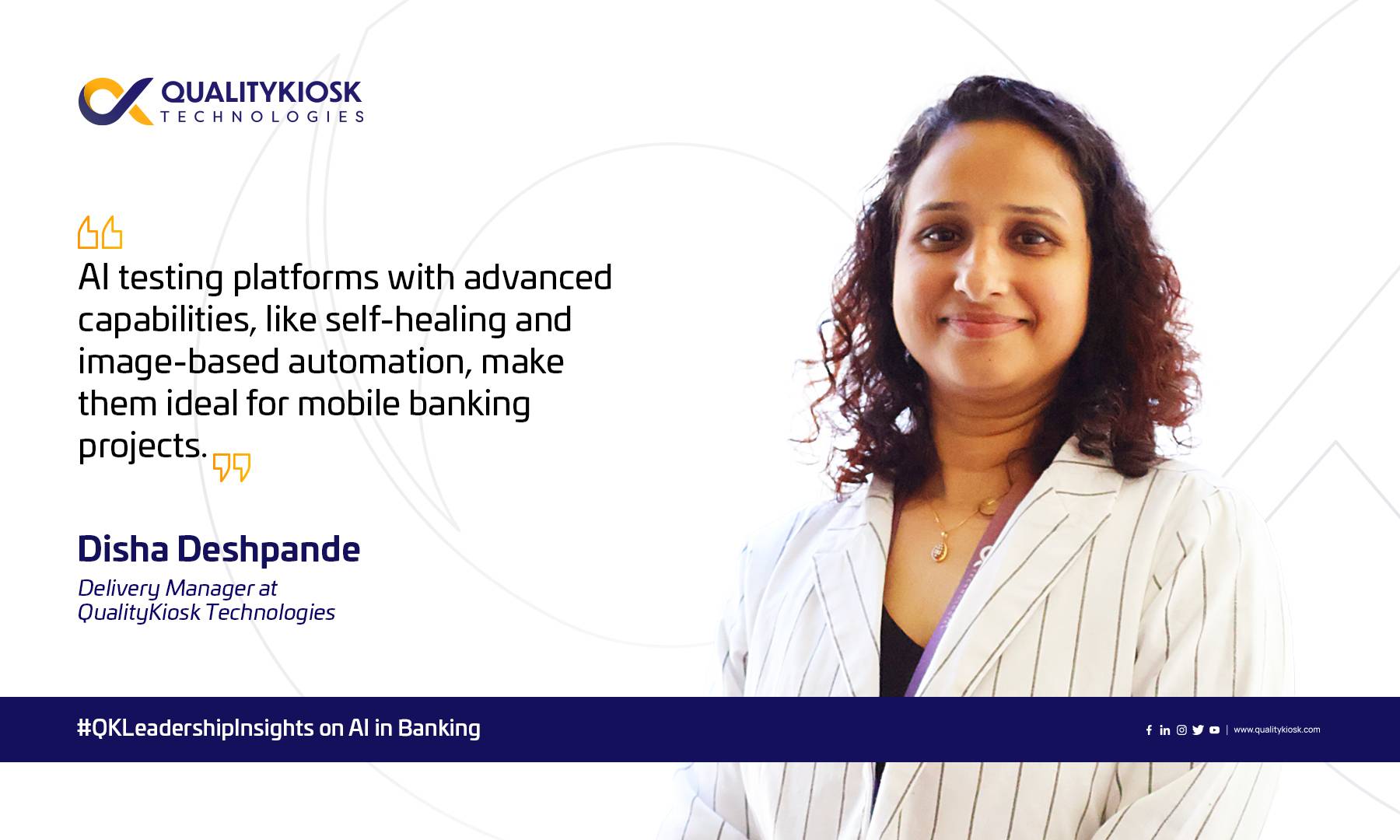
When the term “AI” was coined in 1956 at Dartmouth College, many criticized this concept, considering it “farfetched.” However, Artificial Intelligence has come a long way. Initially limited to computers, AI is now used in every sector—technology, marketing, services, management, and more. Among all these verticals, Artificial Intelligence in IT has flourished over the years.
AI software testing significantly eases the automation testing process to achieve desired results. However, there’s much more to explore about the domains of AI-driven testing in software technology in this article.
What is AI Testing in Software Development?
Contrary to sensationalist media portrayals, AI is not all about destroying humanity. In reality, AI has been incredibly helpful in facilitating smoother and seamless processes.
Artificial intelligence in IT and software development and testing automates repetitive tasks, allowing professionals to focus on essential tasks. It reduces the direct involvement of testers or developers and leverages technology to complete work quickly and efficiently.
Primarily, it uses data and algorithms to work and provide error-free results.
Benefits of Software Testing in AI
Here are some of the best advantages one can avail from AI-driven testing:
Upgraded Accuracy
The global AI market is expected to be $60 billion. Such high numbers indicate the impeccable demand for Artificial Intelligence in IT and software testing due to its accuracy.
A human tester is bound to make a few errors, irrespective of how meticulous a person is. This inclination for error identification can be reduced when the task is monotonous. However, automation with AI testing tools helps reduce errors without overlooking critical details.
Covers More Work in Less Time
The software testing process involves properly evaluating and verifying the software’s functionality. This process can be time-consuming and costly.
However, automating the same with AI-driven testing can reduce time and overall cost. Furthermore, human resources can focus on other research tasks.
Enhanced Bug Detection
Conventional testing methods might overlook a few bugs due to human errors, potentially slowing down software development. This limitation does not apply to AI-led QA testing.
Artificial Intelligence in IT speeds up the software development process through faster bug-tracking methods, detecting the smallest errors and notifying developers of necessary corrections.
Wider Scope
AI-driven testing increases the testing scope, significantly improving software quality by examining memory, internal programs, data tables, file contents, etc. It facilitates numerous tests, reducing time spent on software testing.
Moreover, it employs pattern and image recognition to detect any visual bugs. This ensures proper and engaging software UI – a process that could be cumbersome with manual testing.
Improves Regression Testing
Regression testing evaluates and detects changes in existing features due to code alterations. Given that this process involves running existing tests, it can become time-consuming.
However, automating the same with AI can expedite the process without compromising accuracy.
Helps Developers and Testers
AI QA testing reduces the workload of developers and testers, enabling them to focus on other software development areas. Such automation helps the developers and testers engage in better activities and skills.
Better Growth
AI software testing goes a long way in simplifying the processes of developers and testers. It introduces new testing approaches and uses existing customer data to identify patterns and predict outcomes. This insight aids companies or clients in refining their future strategies for improved growth and profitability.
Challenges Faced by Artificial Intelligence in Software Testing
Now that we have covered the advantages, the following are the challenges associated with AI in software testing:
Adaption of AI
Integrating artificial intelligence in IT requires meticulous planning and adaptation, which might discourage businesses from taking this path.
Concerns Regarding ROI
Businesses often worry about the ROI due to the initial expense associated with AI software testing. However, these companies must recognize this expenditure as a worthwhile investment that yields revenue-driven results.
Security Concerns
Among various challenges, security remains paramount due to uncertainties regarding the relevance of AI. However, as AI continues to evolve, efforts are being taken to enhance its safety and security.
Future of AI-driven Testing
Given the features and elements, the future of artificial intelligence in IT appears promising. It is set to transform various domains:
Predictive Test Selection
AI testing tools should be designed to distinguish between effective and ineffective tests. This can save time and accelerate the testing process. For example, companies like Google and Facebook have implemented predictive test selection, prioritizing tests likely to encounter issues or fail.
Data-driven DevOps
AI-driven testing can use data from manual testing for insightful analysis. This data can be used to predict growth trends and make informed decisions.
Impact of AI Tools ON QA PROCESSES
Despite initial criticisms, the efficacy of AI-driven testing and its significance in IT has stood the test of time. Several AI testing tools, such as TestCraft, Functionize, Sapienz, and Watermelon, among others, have emerged to streamline the QA process.
With advanced AI capabilities, these platforms use algorithms to adapt and improve testing scenarios to enhance accuracy in the testing phase. They also offer the capability to perform image-based automation by analyzing and interacting with GUIs. This automation eases locating non-standard UI elements which is not easily possible using traditional locators. Especially for projects in mobile banking solutions.
About the Author


Disha is renowned for her transformative influence on QA strategies through automation and process innovation. She sets industry benchmarks for efficiency and quality. Her visionary leadership at QualityKiosk focuses on advanced testing methodologies, inspiring her teams and the broader QA community. Beyond project execution, she shapes the discourse on quality assurance and mentors the next generation of QA professionals.